By Vulpesco, written for this demo from the cited sourcesPublished October 2, 20264 min read
Clinical review: Not reviewed by a dentist and not medical advice
The short answer
Usually not during the visit, because your dentist numbs the tooth first. Most people feel pressure and vibration, not sharp pain. Afterward the tooth and gum can be sore, or sensitive to hot and cold.
This is general information. How a crown feels for you depends on the tooth, the reason it needs one and your own sensitivity, so ask your dentist what to expect.
What a crown is
A crown is a tooth-shaped cap that fits over a tooth and replaces its visible part above the gum line. The American Dental Association lists several reasons for one: to strengthen a tooth with a large filling, to protect a weak or broken tooth, to cover a tooth that is badly shaped or discolored, to hold a bridge in place, or to cover a dental implant.
During the visit
For a traditional crown, the dentist first numbs the tooth and the gum around it with a local anesthetic. MedlinePlus says the dentist will numb the tooth and neighboring teeth and gums, so you do not feel the work.
The injection itself can sting for a moment. Many dentists put a numbing gel on the gum first. Once the area is numb, the dentist removes any decay or an old filling and reshapes the tooth so the crown will fit over it. Then they take an impression or a digital scan of the tooth so the crown can be made.
You may hear the drill and feel pressure, vibration and the dentist's hands moving in your mouth. That is normal. If you feel anything sharp, say so. Raise a hand, and the dentist can pause and give more anesthetic. Agreeing a signal before you start is a good idea, especially if you feel nervous.
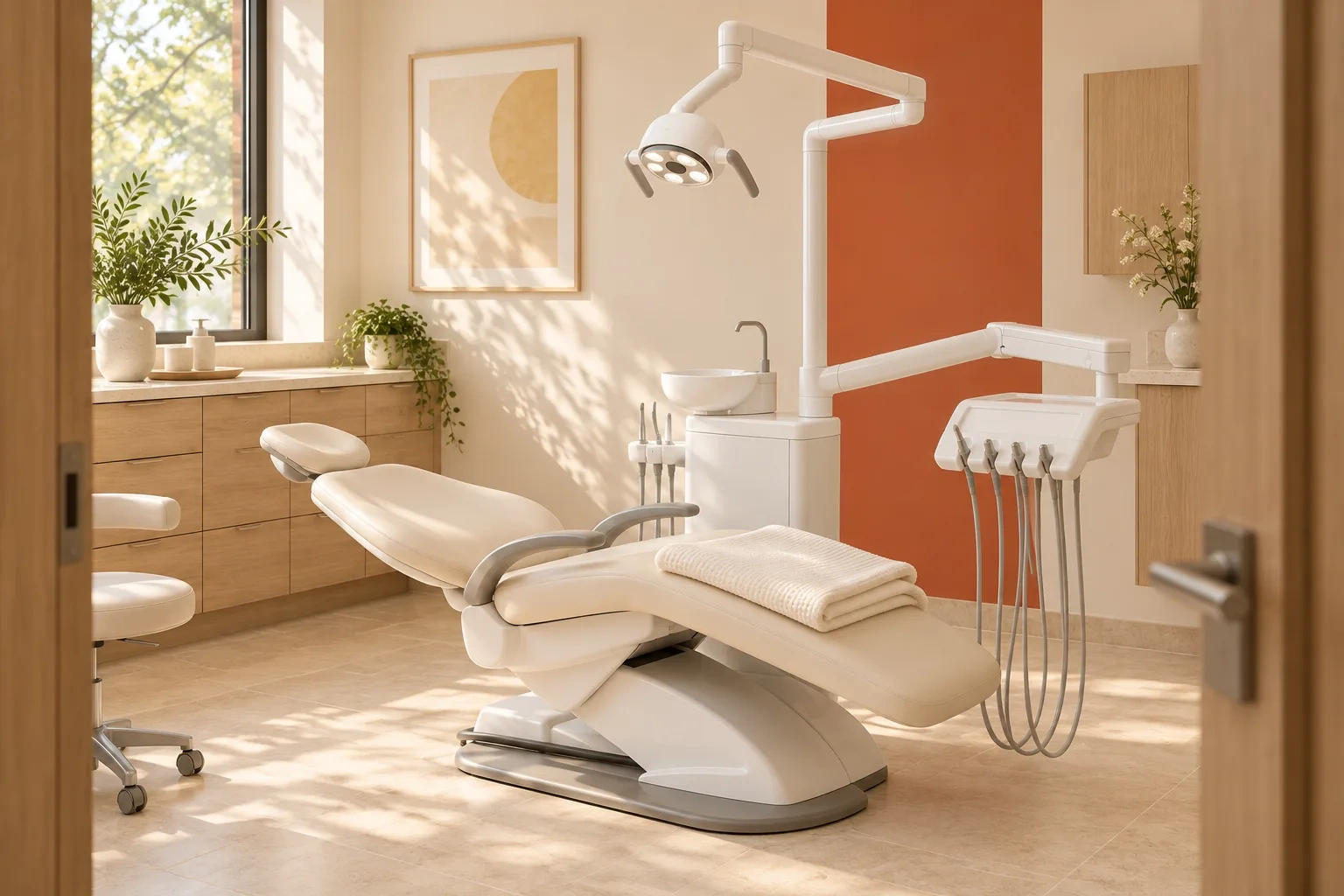
Illustrative, AI-generated
After the visit
The numbness usually lasts a few hours. Avoid chewing until it wears off, because it is easy to bite your cheek or tongue without feeling it.
When it fades, the tooth and the gum may be tender. MedlinePlus notes that the nerve of the tooth can become extra sensitive to cold and hot temperatures, and that it may be painful. Over-the-counter pain medicine taken as the label directs often helps. Brushing and flossing gently around the area keeps it clean.
In some cases the nerve of a tooth is already damaged or becomes irritated enough that a root canal is needed. Your dentist will tell you if that is likely.
If you have a temporary crown, avoid sticky foods and chewing on that side, and floss carefully so you do not pull it off.
Two visits or one
The traditional route takes two visits. At the first, the dentist prepares the tooth, takes the impression and fits a temporary crown. The permanent crown is made in a dental laboratory. At the second visit, the temporary crown is removed and the permanent crown is fitted, checked and cemented.
Some practices use chairside CAD/CAM systems (computer design and a milling machine in the office) that can make a crown during a single appointment, without a temporary crown. Not every tooth or situation suits a one-visit crown, and not every practice has the equipment. Ask what your dentist recommends and why.
When to call your dentist
Call if, after a crown:
- The bite feels uneven or "high", as if the crown touches first.
- Pain does not ease with over-the-counter pain medicine.
- Swelling gets worse, or a bubble appears on the gum.
- A temporary crown comes off, or the permanent crown feels loose.
- Sensitivity does not settle, or gets worse.
An uneven bite can cause discomfort and may need adjustment. Persistent or worsening pain needs a dental assessment, because there can be other causes.
General information only. It does not replace advice from a dentist who has examined you. Brazos Street Dental is a fictional practice in a Vulpesco demo. See illustrative crown prices.
Sources
- MedlinePlus (National Library of Medicine): Dental crowns, reviewed October 14, 2024. Accessed October 2, 2026.
- American Dental Association, MouthHealthy: Crowns. Accessed October 2, 2026.
- Journal of the American Dental Association: Clinical performance of chairside CAD/CAM restorations. Accessed October 2, 2026.